
English: scroll down
Zeezicht en een overdadig ontbijt
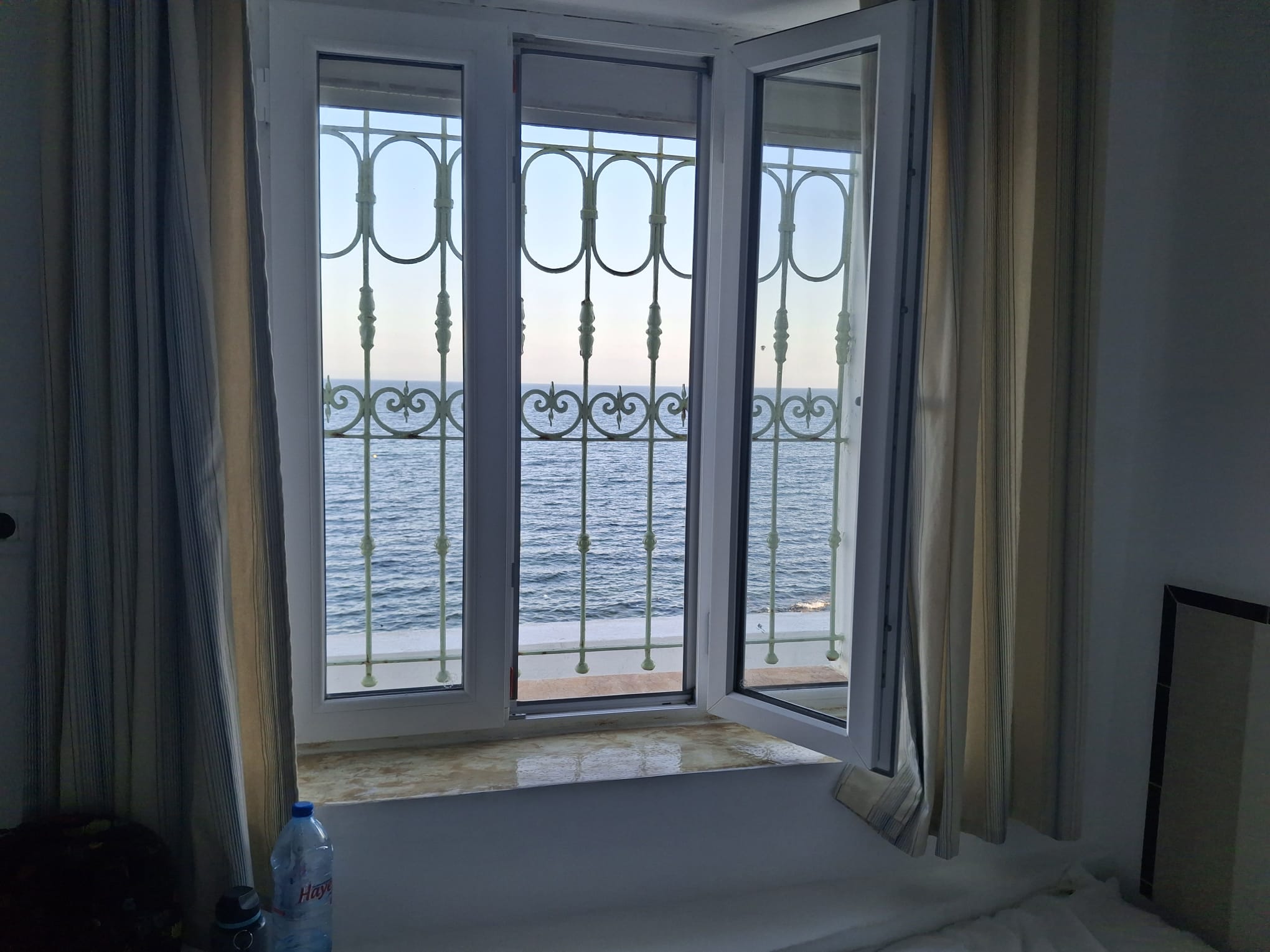
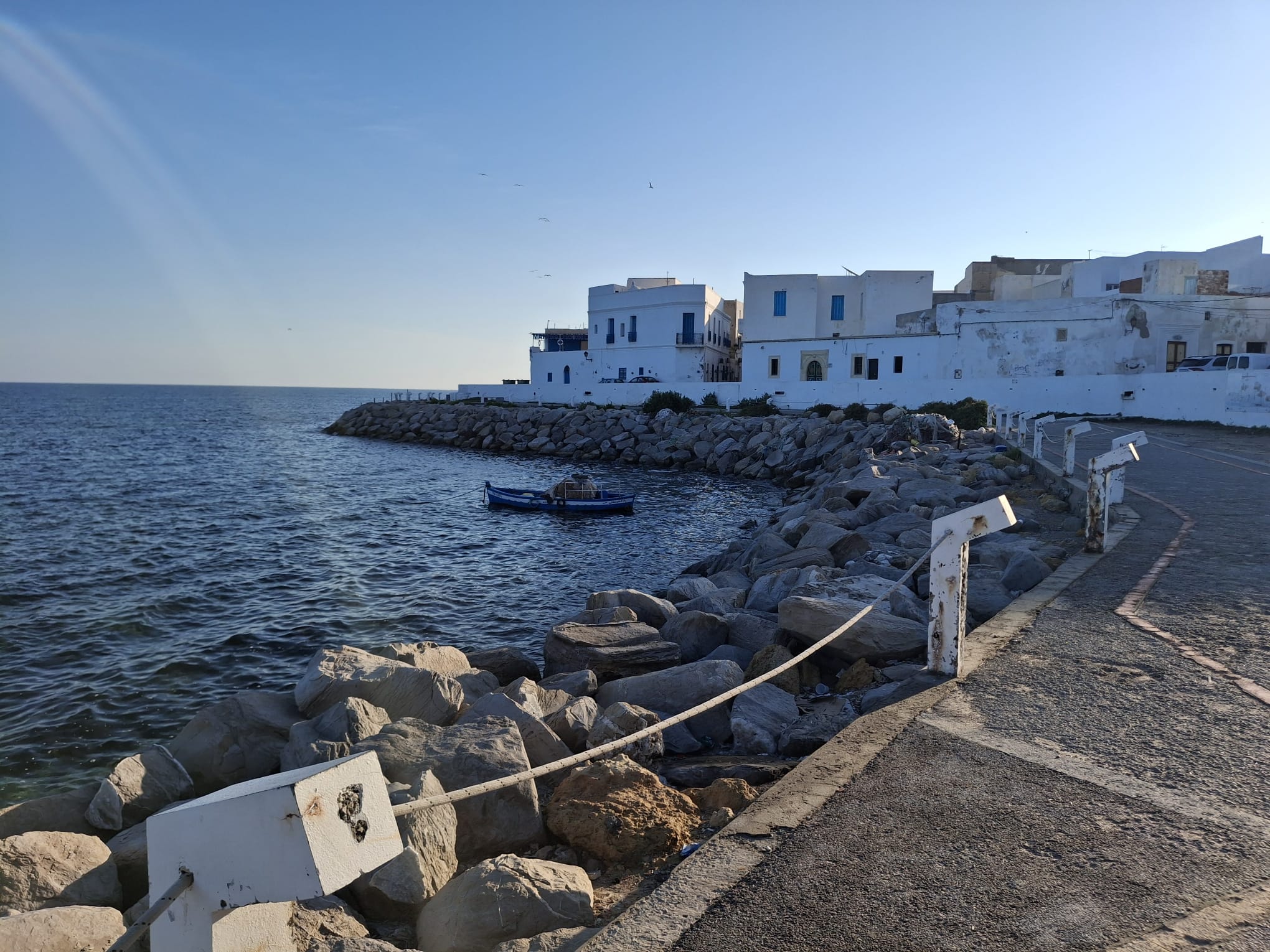
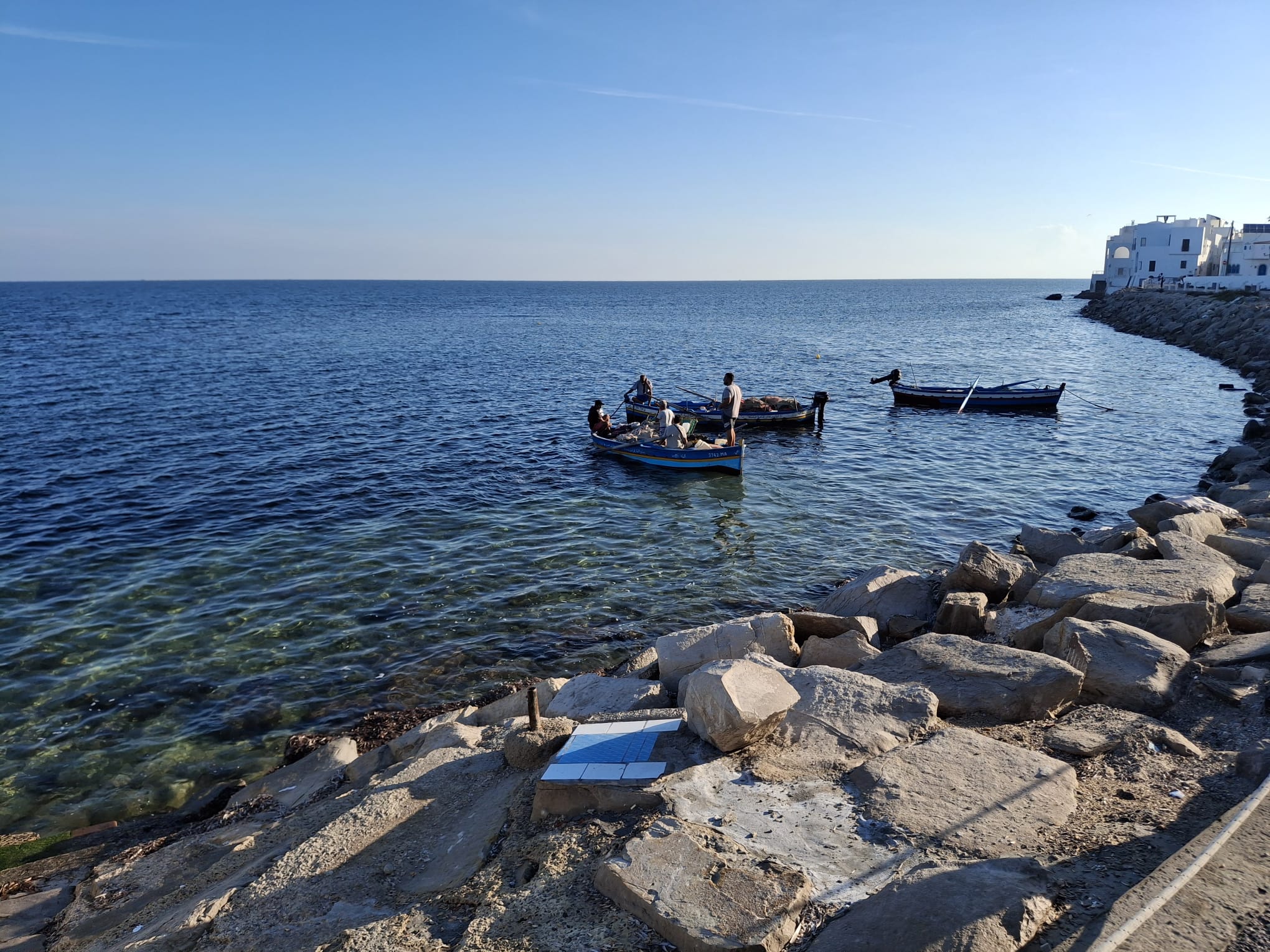
De zon staat om zeven uur al hoog aan de hemel als ik mijn ogen open. Annelieke heeft vanuit bed de zon al zien oprijzen uit de zee. Het is een fantastische hotelkamer. Piepklein, maar met een uitzicht dat smaakt naar langer blijven. Helaas trekken we na het ontbijt direct weer door. Gelukkig resteert er nog wat tijd om samen over de boulevard te wandelen. Lokale vissers maken in de vroege ochtendkoelte hun houten boten vaarklaar; ze zwaaien vriendelijk en groeten ons in een mengeling van Arabisch en Frans. Op een opgerolde stapel visnetten heeft een moederpoes haar nestje met pluizige kittens geïnstalleerd. Er lopen hier sowieso opvallend veel katten rond.
Economische groei of welzijn van mensen
We zijn keurig op tijd terug voor het ontbijt, dat dit keer bestaat uit ‘maar’ vijf gangen: vers stokbrood met vijgenjam, romige halva, notenpasta, een spiegelei geserveerd op een kruidige tomaten-peperprut, een pain au chocolat, een zoete reuzendonut en tot slot een dunne crêpe, vrolijk versierd met chocoladesaus en smarties. Bij de receptie raak ik in gesprek met Elyes, een student economie die in het hotel werkt. We filosoferen over economische groei. Hij vertelt gepassioneerd hoe zijn land decennialang is leeg getrokken voor puur commerciële belangen, terwijl echte vooruitgang toch over het welzijn van mensen en de gemeenschap zou moeten gaan. Hij ergert zich zichtbaar aan de vloedgolf van goedkope prullaria die de lokale markten overspoelt: spullen waar eigenlijk niemand echt behoefte aan heeft. Precies wanneer het gesprek de diepte ingaat, roept de toeter van de bus ons naar het vertrek.
Een levend ecosysteem tegen de tractor van de buurman
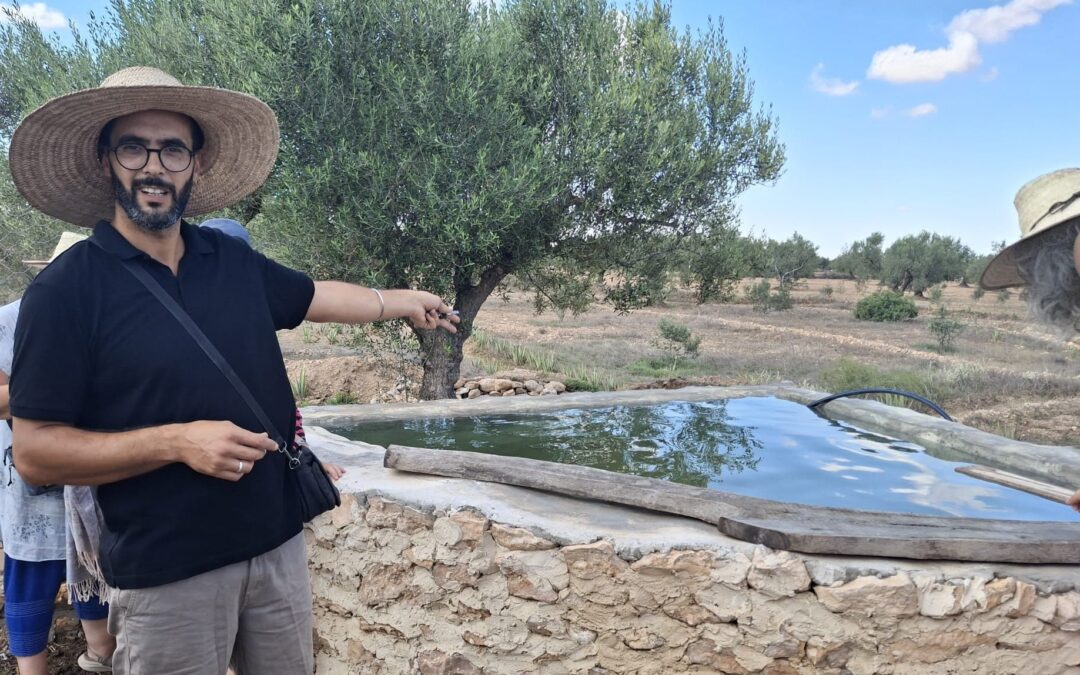
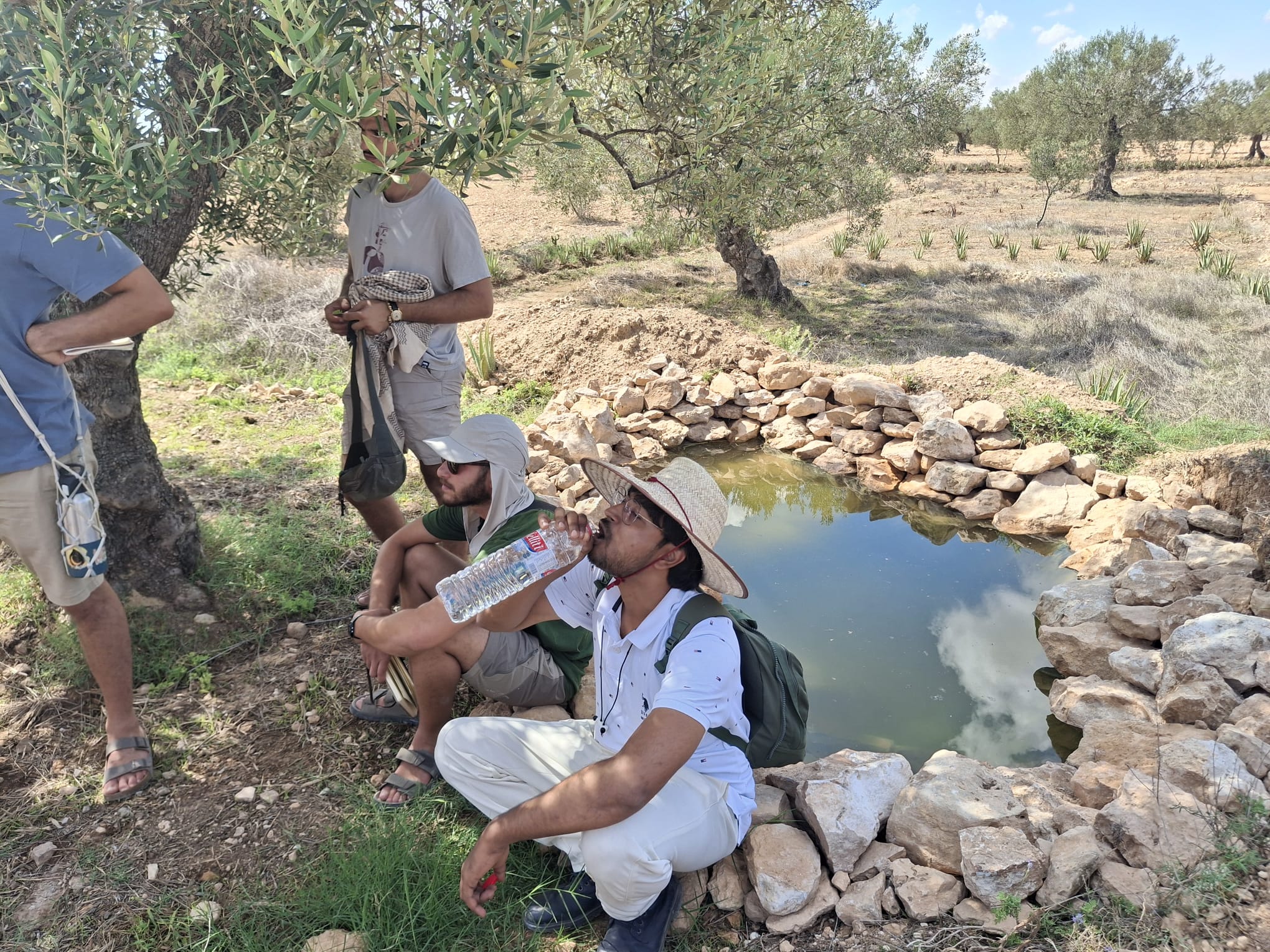
We rijden naar het land dat al generaties lang door de voorouders van onze gids Elyes wordt bewerkt. Elyes deelt zijn droom voor deze plek: hij wil de monocultuur doorbreken door actieve biodiversiteit te stimuleren en innovatieve wateropvang te combineren met traditionele irrigatie. Hij legt uit dat grond hier niet per vierkante meter wordt verhandeld, maar per olijfboom. Omdat de bodem bezaaid ligt met grove kiezels, heeft hij met zorg comfortabele paden van zand en stenen aangelegd, geflankeerd door stenen goten voor de waterverdeling.
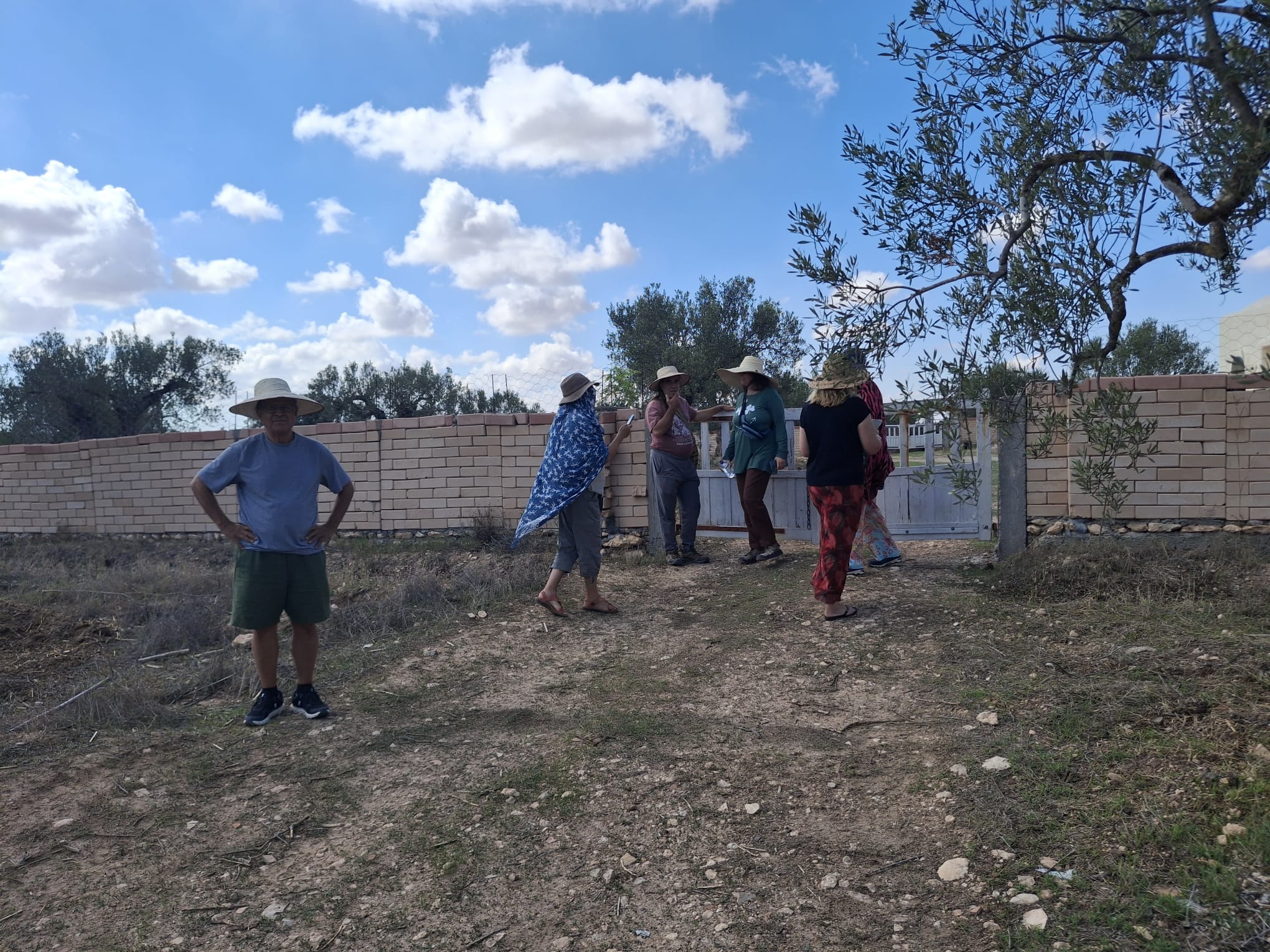
Op het terrein is een bescheiden eenkamerwoning gebouwd. Voor het huis ligt een ondergrondse cisterne die elk spatje kostbaar regenwater opvangt. Rondom de tuin heeft hij een stevige stenen muur opgetrokken. Op Miekes vraag of die dient om wilde dieren buiten te houden, antwoordt Elyes met een grijns: “Nee, die muur staat er puur om de buurman met zijn tractor buiten te houden!” Alleen zo blijven zijn kwetsbare, jonge aanplantingen beschermd tegen rücksichtsloos ploegen.
De meditatieve boerenloop
Zijn tuin is een oase van diversiteit in wording: tussen de klassieke olijfbomen groeien vlezige Aloë vera, prikkelige wilde asperges, rijen schijfcactussen (Opuntia), jonge granaatappelboompjes, een zilverachtig bloeiende woestijnalsem (chih), een jonge acacia en een markante cilindrische cactus. Langs de randen liggen composthopen van gesnoeide olijftakken en voedzame mulch van aangespoeld zeewier. In de hoek fungeert een groot waterreservoir als verdeler voor de irrigatiegoten, terwijl buiten de omheining een natuurlijke overloopvijver onder een schaduwrijke boom ligt. Kikkers kwaken vrolijk tussen de waterplanten en vissen happen naar muggenlarven; met een beetje geluk strijken er straks ook libellen neer.
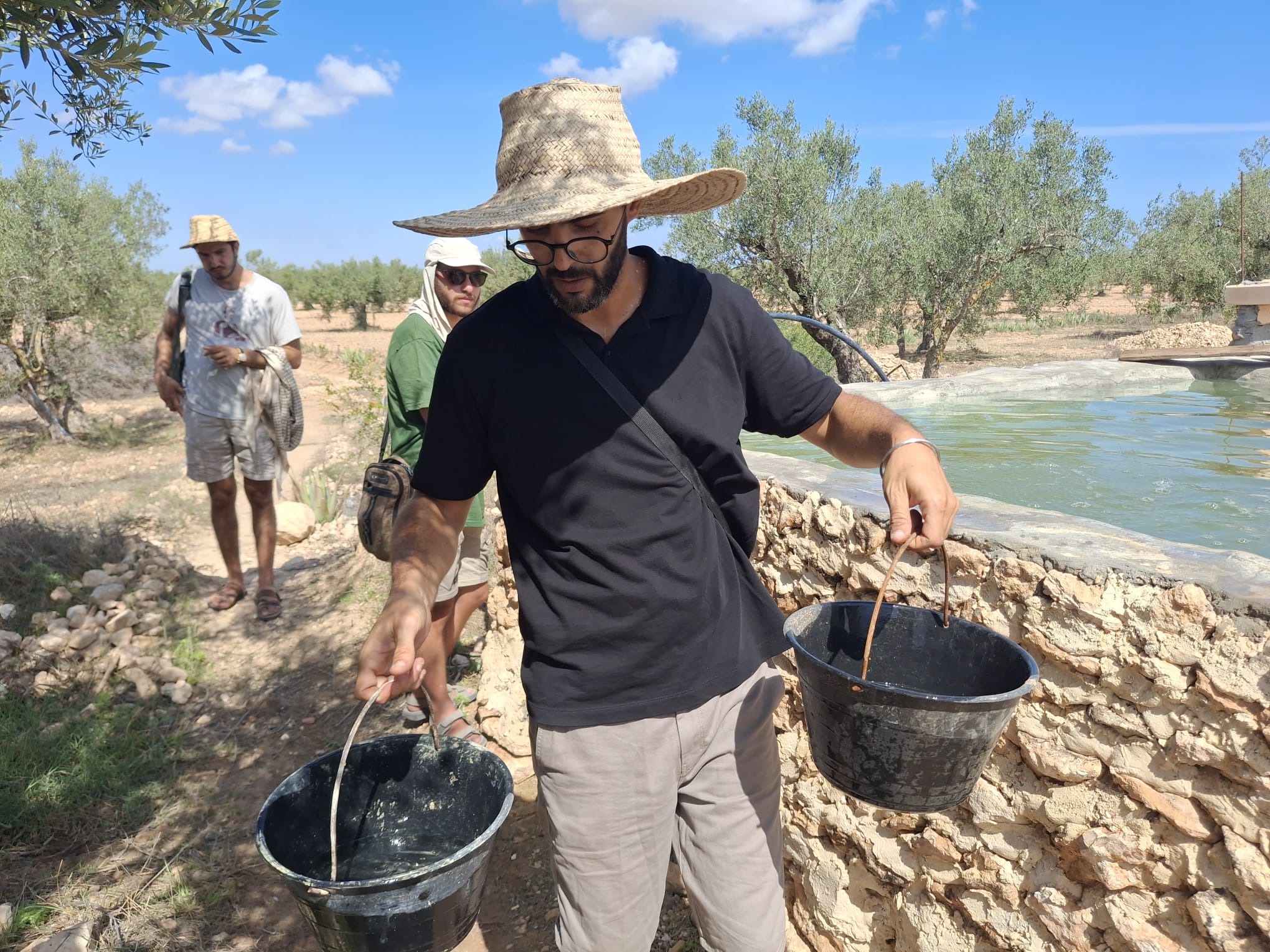
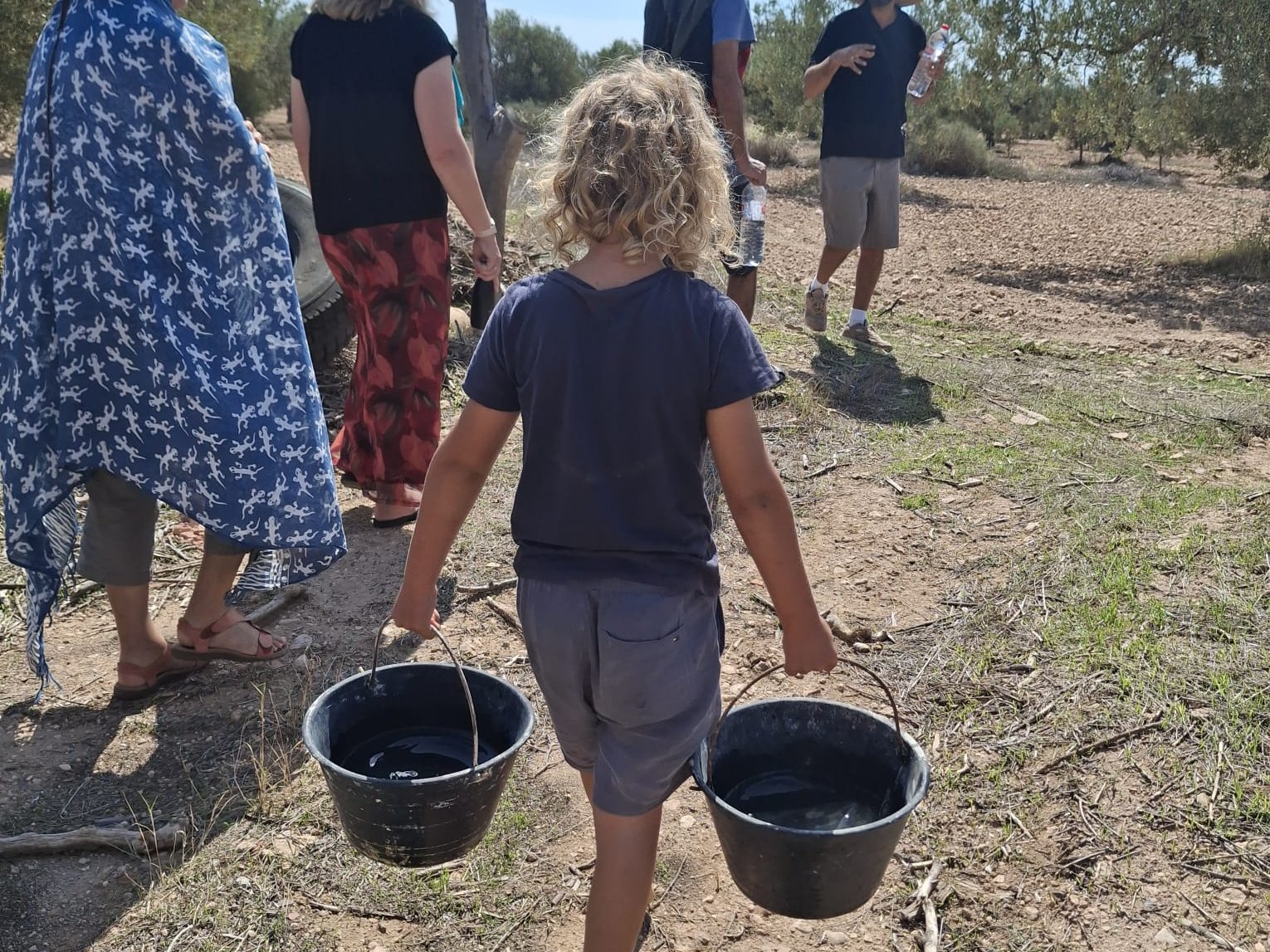
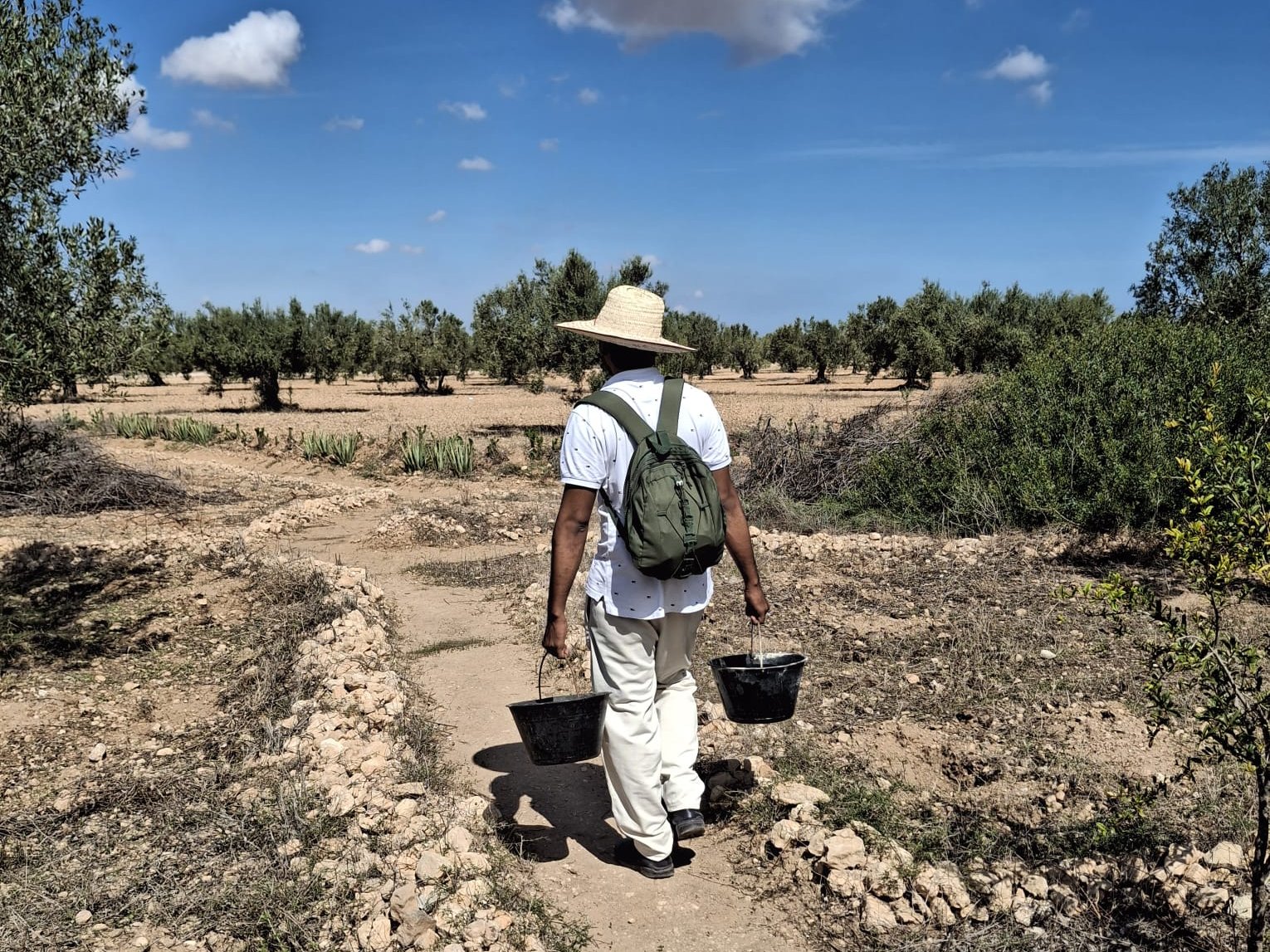
Bij het waterreservoir tilt Elyes twee zware emmers op en demonstreert de ‘meditatieve boerenloop’: een repeterende beweging die niet alleen het land voedt, maar ook het lichaam traint en de geest tot bedaren brengt. Stefan en Prajjwal pakken de uitdaging meteen op en stappen even later geconcentreerd met volle emmers water door de tuin. Joe vult aan dat de bouw van het ecologische huisje mede mogelijk is gemaakt door een gulle gift van een vriend van Penny uit Californië. Nu de financiële basis er ligt, verschuift de focus volledig naar het bouwen van een gemeenschap en het opzetten van regeneratieve projecten.
Eenzame bomen op een kale akker
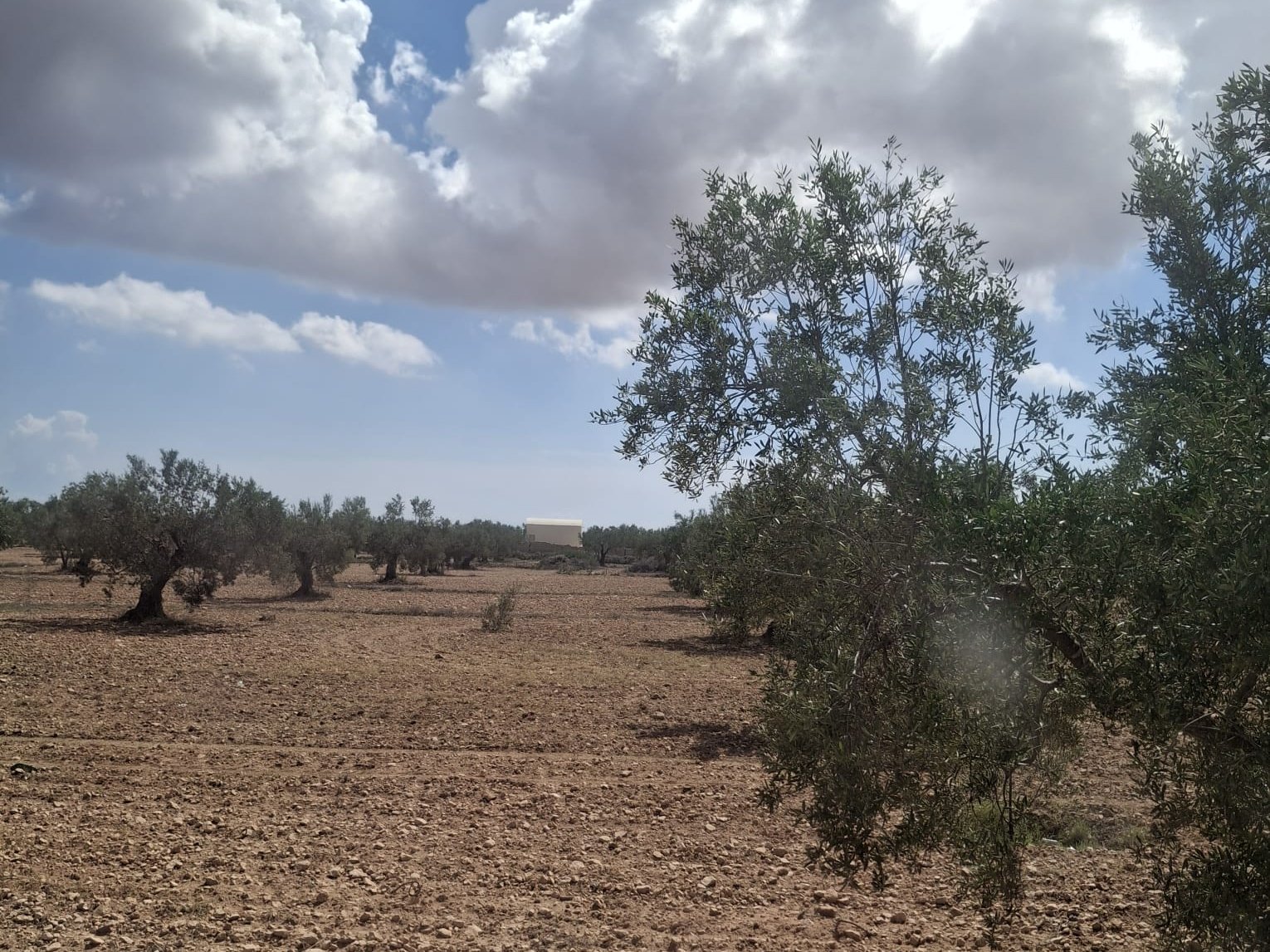
Wanneer we over het aangrenzende land van de buurman teruglopen naar de bus, wordt het contrast pijnlijk zichtbaar. De boeren hier ploegen hun grond elke drie maanden rigoureus om om ieder sprietje ‘onkruid’ te vernietigen. De olijfbomen staan strak in het gelid, minimaal vijftien meter uit elkaar. Omdat bomen in een monocultuur vatbaarder zijn voor ziektes en plagen, probeert men kruisbesmetting te voorkomen door maximale afstand te bewaren.
Het doet me direct denken aan de schorskeverplagen in het Duitse Harzgebergte, waar eentonige sparrenbossen massaal het loodje legden. Het is de tragische, omgekeerde logica van industriële landbouw: men creëert een kunstmatige monocultuur, en wanneer het verzwakte systeem kwetsbaar blijkt, worden de bomen veroordeeld tot eenzame opsluiting om epidemieën te beteugelen. Deze olijfbomen voelen wezenloos en eenzaam. Afgesneden van een gezond ondergronds netwerk kunnen ze met geen enkele buur communiceren. Geen vogel zingt, geen krekel tjirpt. Er groeit geen grassprietje; er liggen slechts kale, zonverbrande stenen.
De vele gezichten van water
In de schommelende bus keer ik terug naar de centrale vraag die ik deze reis meenam: wat betekent water voor ons gezelschap uit verschillende culturen? Is het heilig, praktisch of helend? Ik denk aan Youssef, die zich regelmatig met uiterste toewijding en concentratie wast. Een ritueel dat spirituele reiniging ademt, maar op hete dagen ook simpelweg zorgt voor een helder hoofd. Ik zie Joe en Hasan weer voor me, die als serene sculpturen onder de waterval stonden, en Denis, die door de Sahara is geroepen om de opgedroogde rivieren vanuit de bergen opnieuw te laten stromen om het prehistorische meer in Centraal-Tunesië te doen herleven.
Opgaan in het landschap
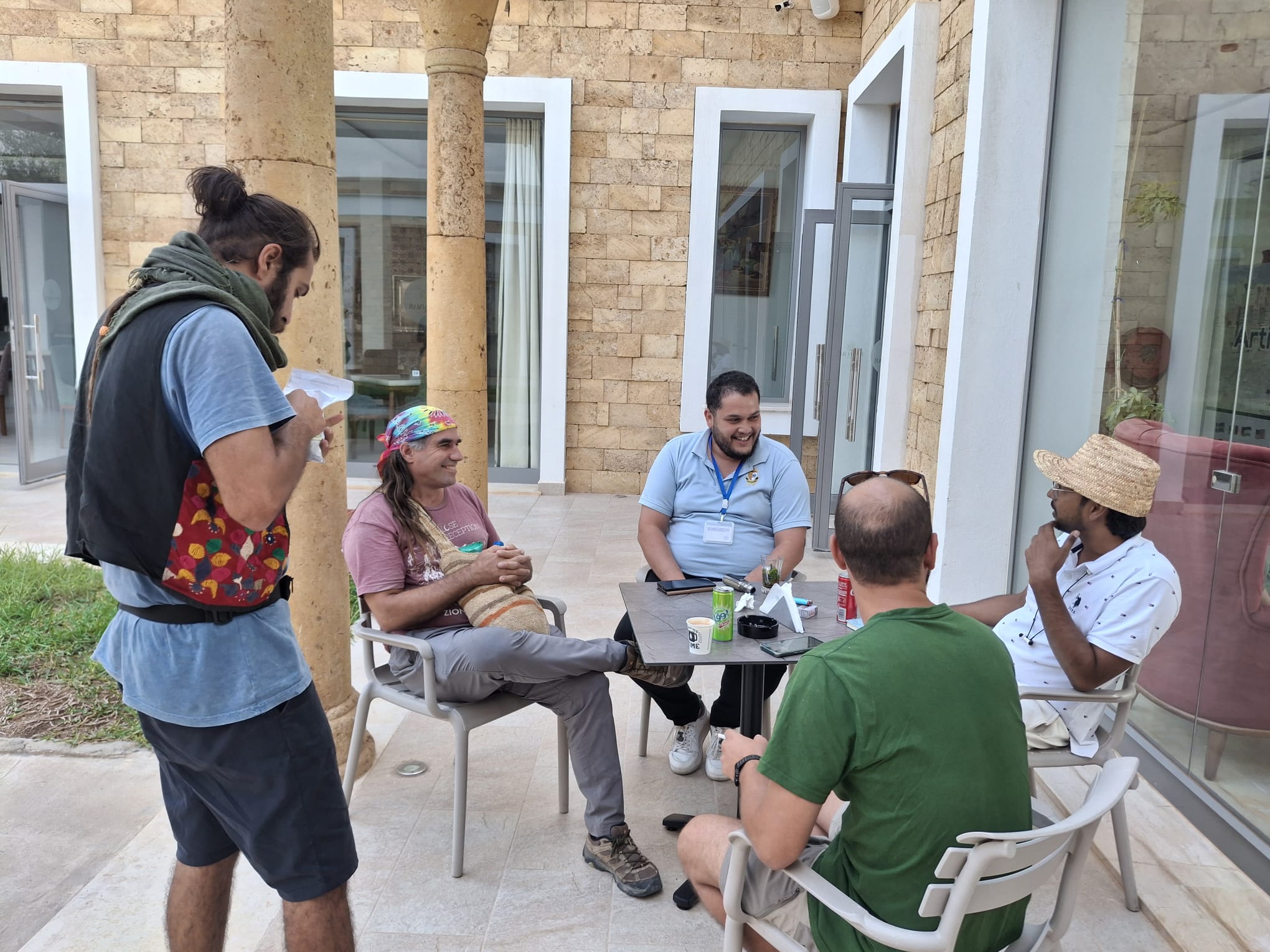
Na een lichte lunch met knapperige salades in Dar Ammar praat ik verder met Claire en Mieke. Claire haalt warme herinneringen op aan een bergmeer waar ze vroeger met haar ouders kampeerde en een ansichtkaart naar haar grootouders schreef. Nog altijd peddelt ze jaarlijks met een kajak over het rimpelloze water. De diepe stilte van het water en de omringende wouden en bergen geven haar telkens het gevoel volkomen samen te vallen met het landschap; een recente foto met die oude ansichtkaart in haar hand verbond heden en verleden in één tijdloze seconde.
Als kind niet mogen spelen in water
Even later schuif ik aan bij Prajjwal. Hij vertelt openhartig dat hij geen enkele spirituele of religieuze connectie met water voelt; hij noemt zichzelf nadrukkelijk seculier. Zijn jeugd in India was doordrenkt van bijgeloof: elke tegenslag werd door zijn bezorgde moeder toegeschreven aan goddelijke onvrede. Terwijl hij dit vertelt, slaat hij met zijn vuist op zijn andere hand om zijn opmerking kracht bij te zetten: “Nee mam, mijn knie ligt open omdat ik hard van mijn fiets ben gevallen!” Dat scherpe besef van oorzaak en gevolg dreef hem de wetenschap in. Tot zijn twintigste mocht hij van zijn moeder niet eens zwemmen uit angst voor onheil. Het zorgeloze spelen in het water heeft hij als kind volkomen gemist.
Toch begrijpt hij de bioregionale visie van Joe Brewer en de Design School feilloos. Juist vanuit zijn wetenschappelijke en ecologische blik ergert hij zich aan schijnheiligheid: hoe kun je een rivier als de Ganges heilig verklaren en er dagelijks ceremoniën aan wijden, terwijl je er tegelijkertijd tonnen giftig industrieel afval en plastic in dumpt? Echte eerbied voor een levensader toont zich niet in rituele woorden, maar in het respecteren en zuiver houden van het ecologische web waarvan we allemaal afhankelijk zijn.
Godin Africa en verdwenen wouden
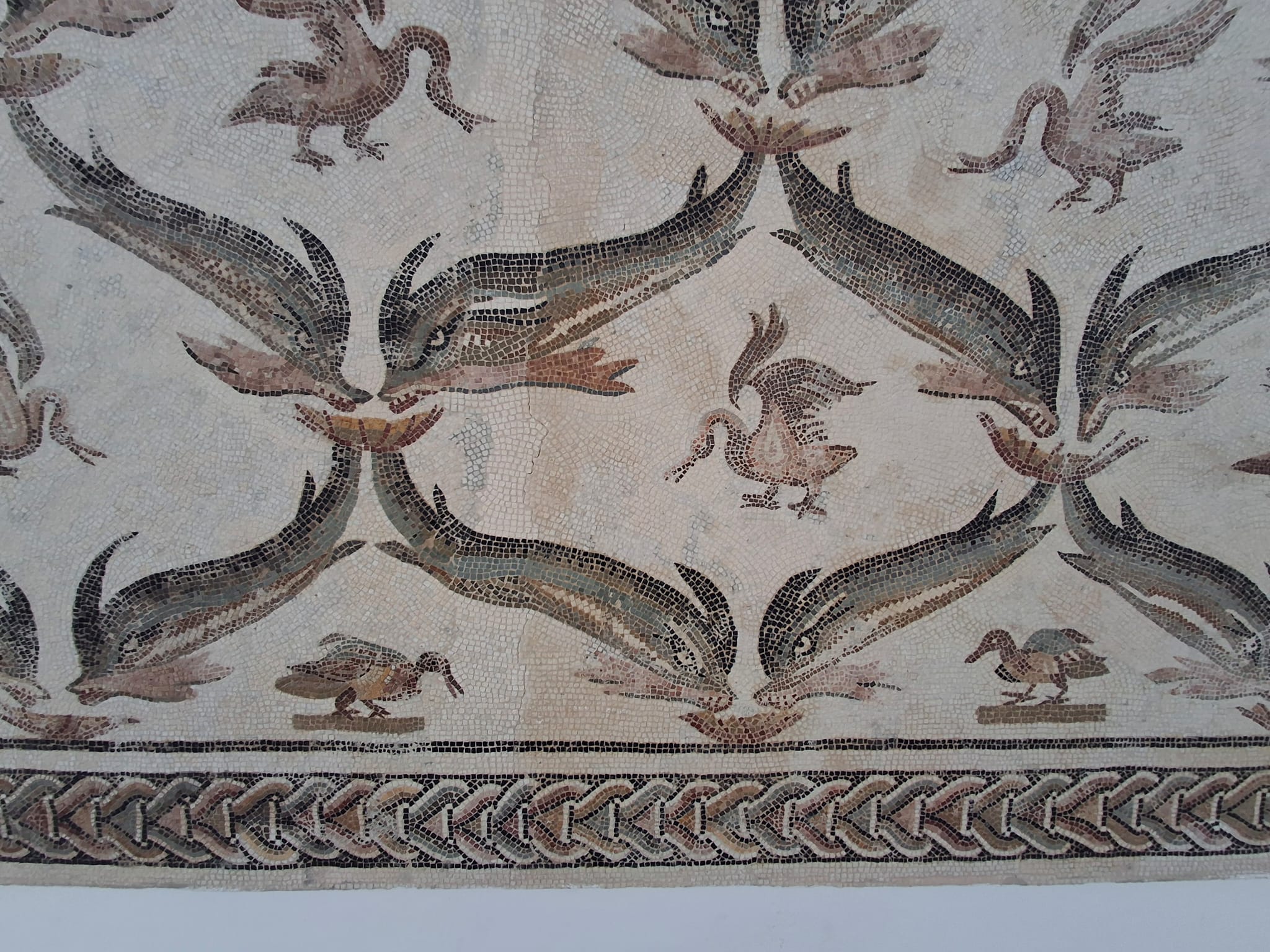
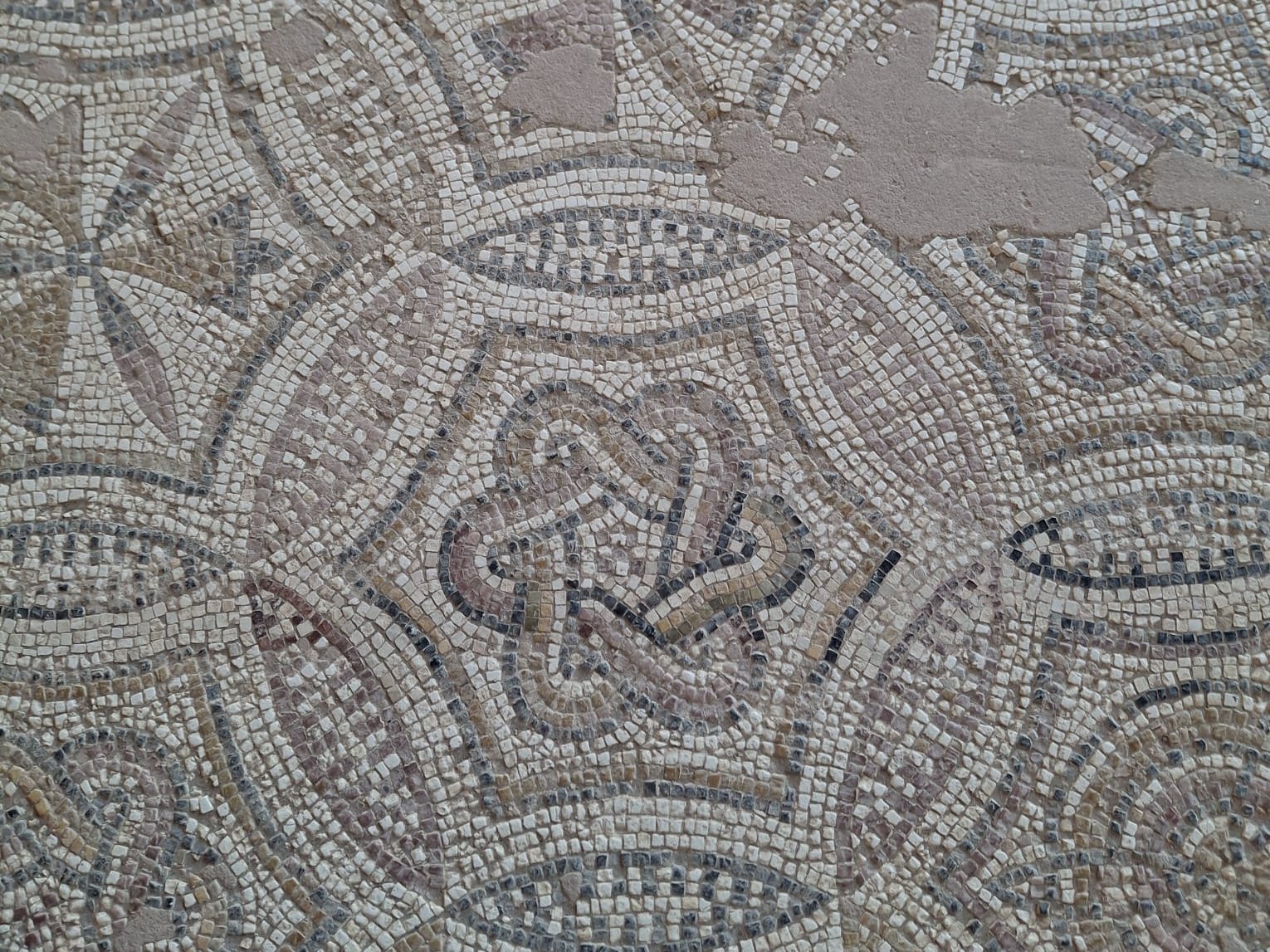
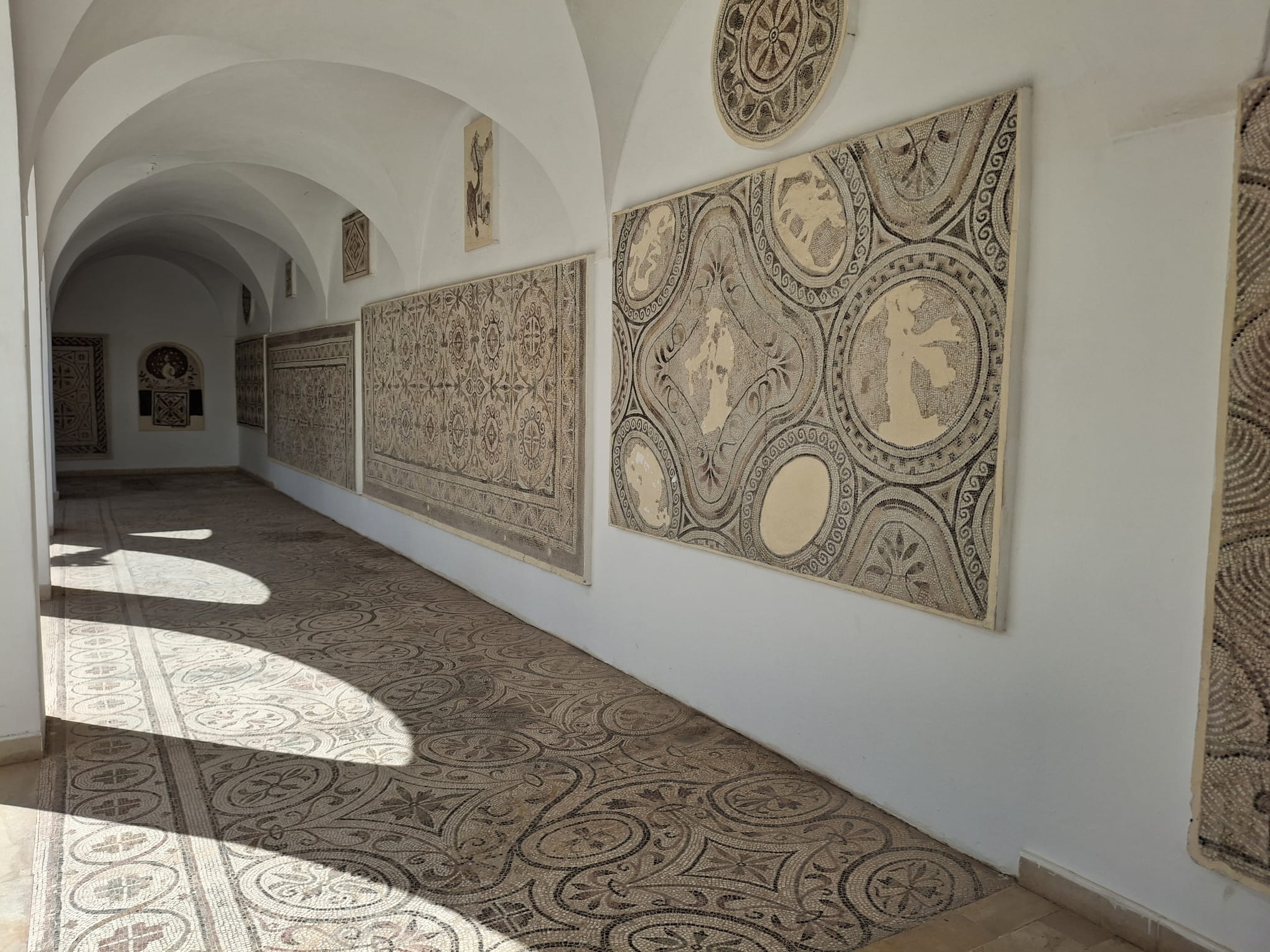
We arriveren bij het archeologisch museum van El Djem. Hier ligt een welvarende Romeinse stad blootgelegd, met als pronkstuk een uitgestrekte villa vol adembenemende mozaïekvloeren die de eeuwen hebben getrotseerd. Het vakmanschap is fenomenaal; duizenden gekleurde steentjes vormen levendige taferelen van ongekende precisie.
Elyes leidt ons naar het beroemde mozaïek van de godin Africa. Hij legt uit dat de Romeinen, buitenstaanders, ooit de naam Africa gaven aan deze noordelijke provincie, een term die later op het hele continent werd geplakt. Zelf voelt hij zich primair Mediterraan, geworteld in de cultuur van de Middellandse Zee. Het sluit naadloos aan bij de bioregionale gedachte die Joe en Penny uitdragen wanneer zij Noord-Amerika aanduiden als Turtle Island: politieke grenzen zijn menselijke constructies die voorbijgaan aan de natuurlijke stroomgebieden.
Samen met ornitholoog Prajjwal bestudeer ik de mozaïeken met dieren. We herkennen hazen, herten, purperreigers, leeuwen, eenden en panters. Een weemoedig gevoel bekruipt ons: rond 300 na Christus was dit landschap een mozaïek van dichte eiken- en dennenbossen, vruchtbare struwelen en open graslanden vol stromende beken.
Van graanschuur naar dorre steppes
Noord-Afrika was de graanschuur van het Romeinse Rijk. De verwoestijning en het verdwijnen van grote zoogdieren waren echter geen natuurlijk noodlot, maar het directe gevolg van eeuwenlange menselijke overexploitatie: meedogenloze houtkap voor scheepsbouw en brandstof, grootschalige ontbossing voor graanmonoculturen, overbegrazing en de massale jacht op wilde roofdieren voor de arena’s. Wat ooit een levend bos was, verwerd door menselijk ingrijpen tot een dorre steppe.
Gladiatoren en dromedarissen bij het amfitheater
Dan komt Tellel en die maant ons te verzamelen. We gaan naar de bus die ons naar de volgende locatie brengt: het kolossale amfitheater van El Djem, een Romeins Colosseum dat bijna onaangetast boven de moderne stad uittorent. Stefan heeft zijn zwaarden mee, gedragen door zijn ouders. In de arena wordt duidelijk waarom. Hij heeft zijn vader Denis uitgedaagd voor een duel.
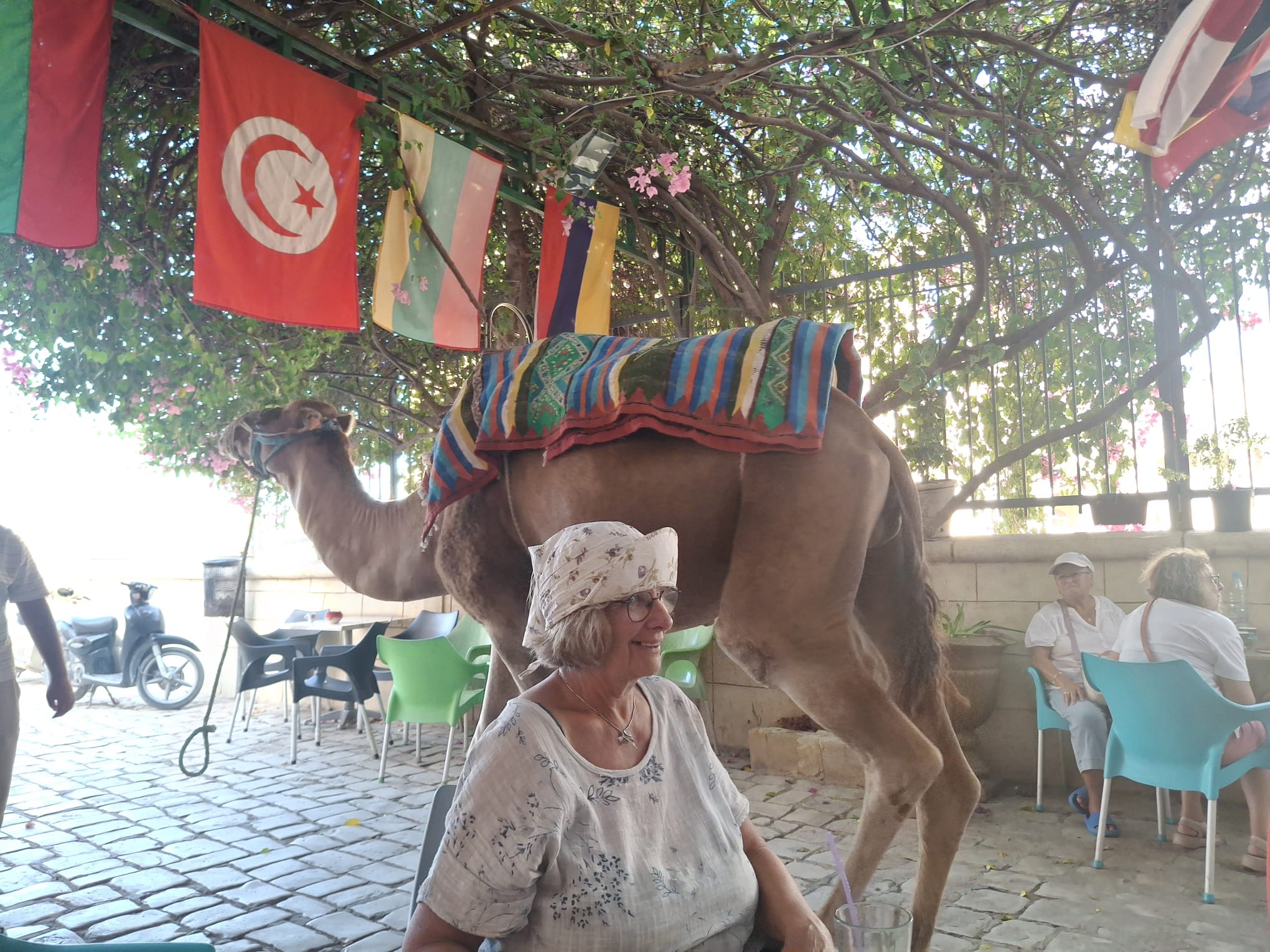
Terwijl we nippen aan verfrissende drankjes, wandelt er vanuit het niets een dromedaris de straat in. Pal erachter tuft een man op een oud brommertje die het dier zachtjes voortduwt. Het dier sloft op zijn dooie akkertje over de straatstenen en maakt totaal geen haast. Het tafereel werkt op mijn lachspieren: een man die zijn dromedaris uitlaat in het hart van de stad! Moet hij de uitwerpselen eigenlijk ook opruimen net als wij in Nederland, vraag ik me hardop af? En hoe groot zijn die poepzakjes dan wel niet, formaatje pedaalemmerzak met een flinke schep erbij? Het oogt bizar, totdat ik bedenk dat wij in Europa in onze historische binnensteden ook gewoon paardenkoetsen laten rondrijden. Zoveel verschilt het eigenlijk niet.
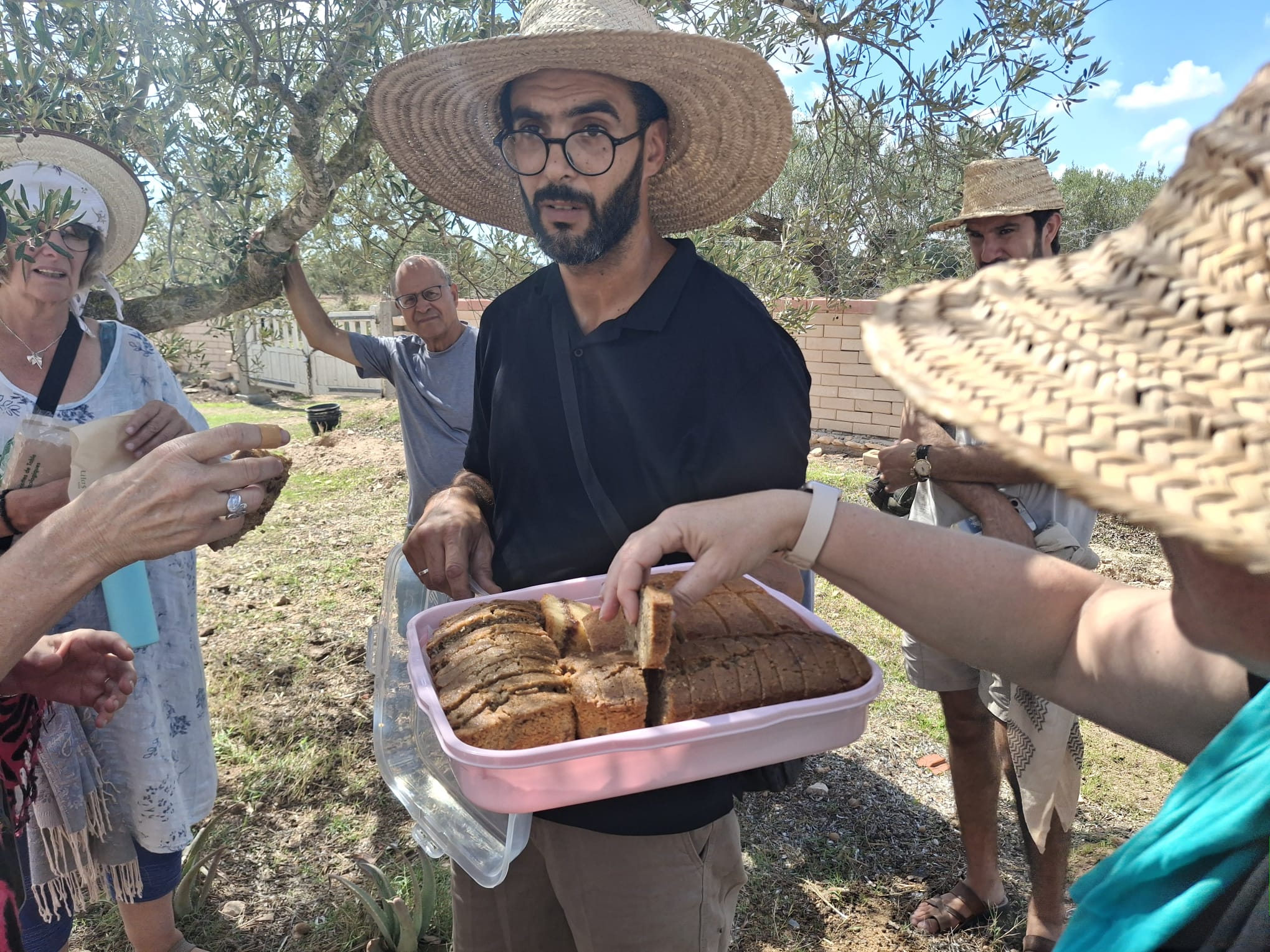
Rondom het plein snuffelen we langs souvenirwinkels vol ambachtelijke mozaïekjes. Henderieke koopt een tableau met een fijn ingelegde boom, en Prajjwal deelt een lokaal gebakken brood uit aan de groep. We genieten van de schaduw onder een bloeiende fuchsia bougainville, tot de bus ons weer roept.
De rivier die door ons stroomt
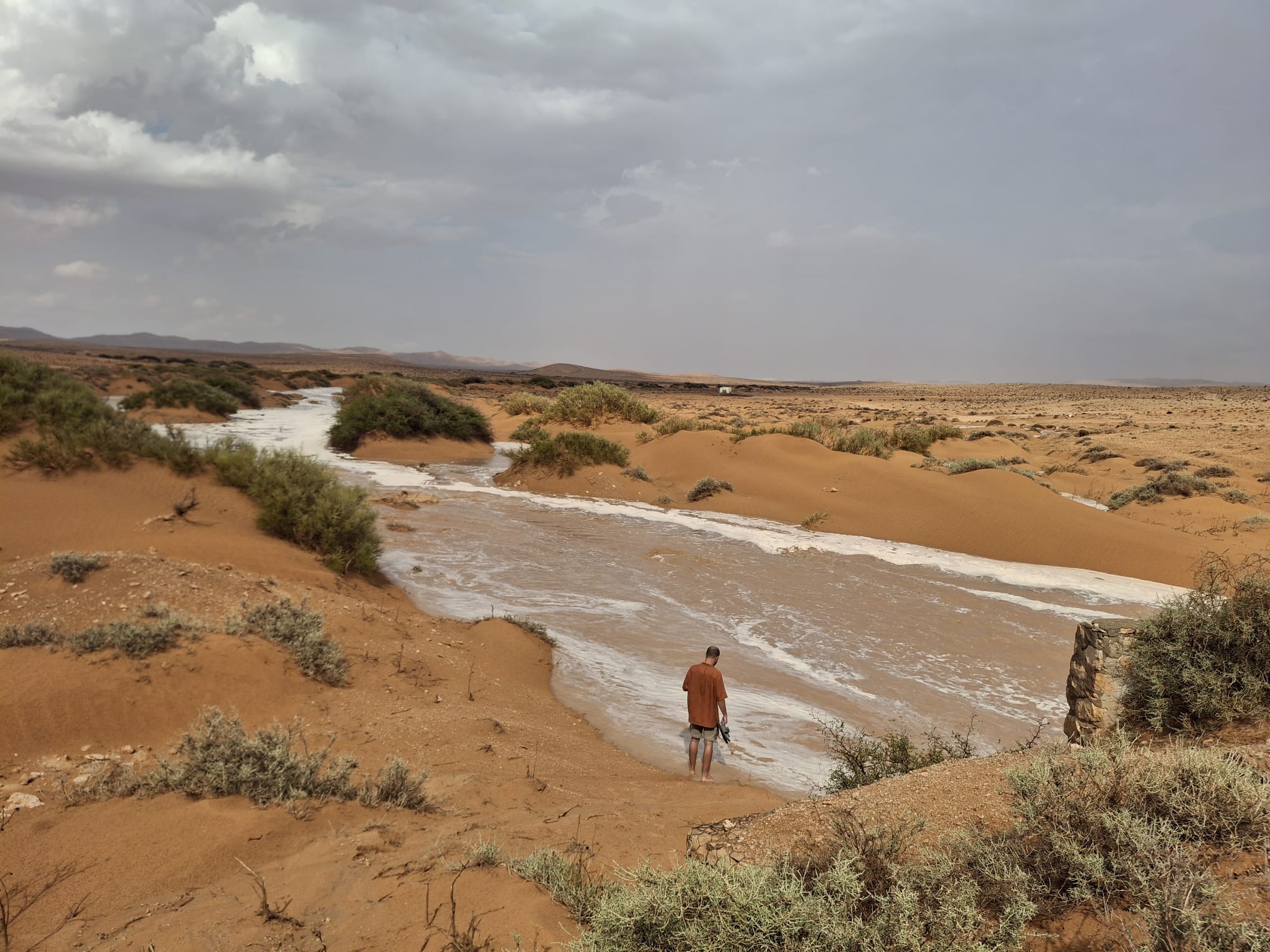
Terwijl de zon langzaam wegzakt en de hemel oranje kleurt, denk ik na over mijn eigen wortels met water. Als kind voer ik met mijn ouders op een bootje en dook ik in de plassen zodra de motor stilviel. Als kleuter schaatste ik al over de dichtgevroren vaarten naar het buurdorp, apetrots. Mijn vader droomde van lange winterse schaatstochten zoals hij die vroeger zelf maakte, maar door de opwarming van de aarde zijn die tochten er voor ons nooit meer gekomen. En wanneer ik naar zwemles ging, zwaaide mijn oma me steevast bemoedigend toe vanaf haar balkon.
Is water voor mij heilig? Misschien niet in de traditionele, religieuze zin, maar wel in existentiële verbinding. Al twintig jaar wandel ik elke ochtend met mijn hond langs de Laak, het riviertje achter ons huis. Ik zie het water kolken na hoosbuien en verstild liggen onder zomers bomenpluis; ik zie jong grut opgroeien en ’s winters zwanen, eenden en meerkoeten samenscholen in een enkele open ijswak. Aan het water lees ik de seizoenen af en voel ik de gezondheid van het landschap.
Oeroud, diep weten
Deze reis door Tunesië heeft die band verder verdiept. Als mensheid moeten we de arrogantie laten varen dat wij de natuur naar onze hand kunnen zetten. De bomen, de aarde en het water dragen een oeroud, diep weten in zich dat wij zijn vergeten. We hoeven alleen maar stil te zijn en opnieuw te leren luisteren.
Buiten schijnt de maan, bijna vol en stralend. Morgen wacht ons een welkome rustdag voordat we aan de driedaagse conferentie beginnen en nieuwe deelnemers aanschuiven. Het voelt passend dat de maan daarna weer afneemt: een tijd om naar binnen te keren, ervaringen te delen en de nieuwkomers mee te nemen in ons weefwerk van grond, bomen en levend water.
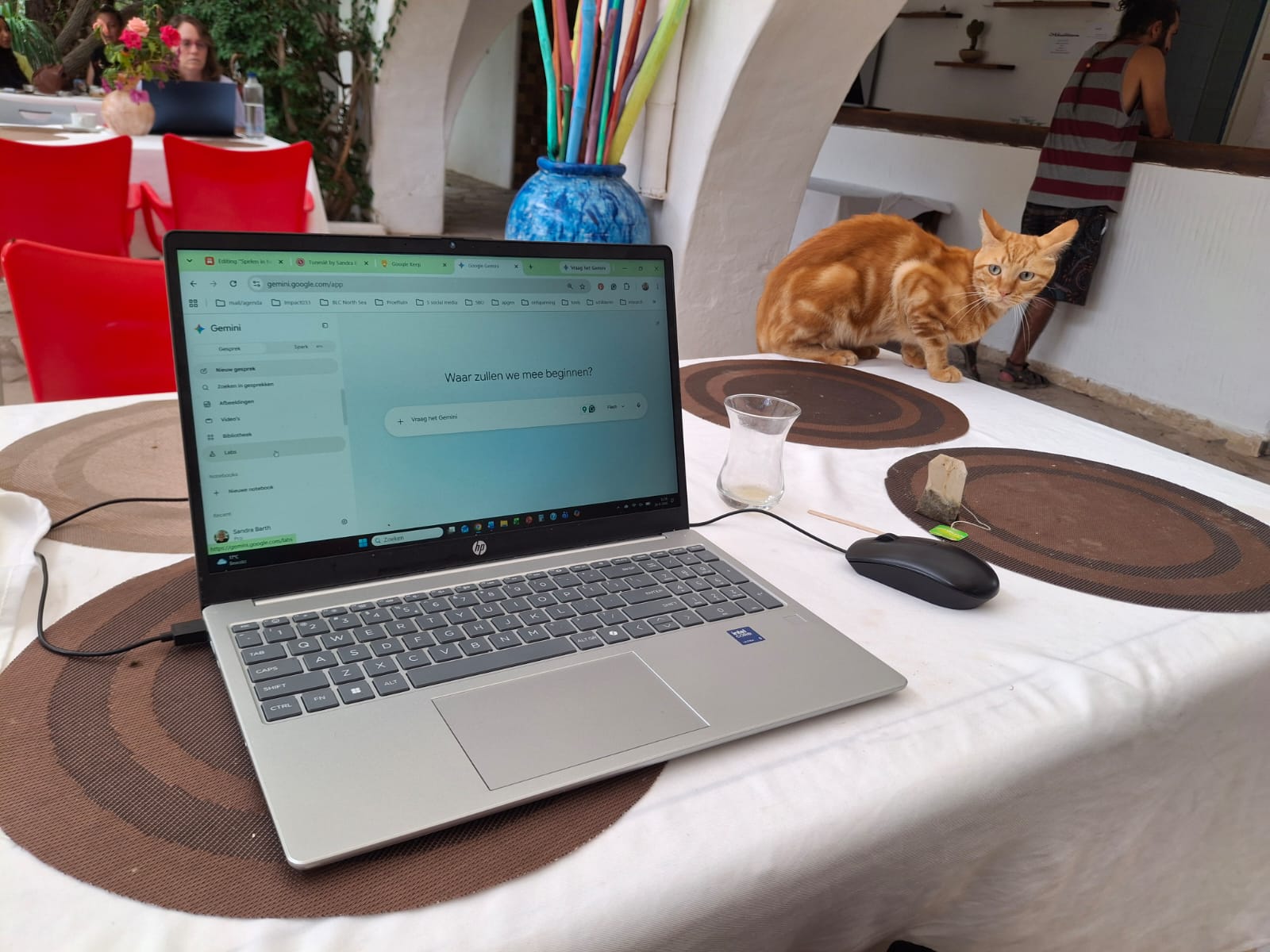
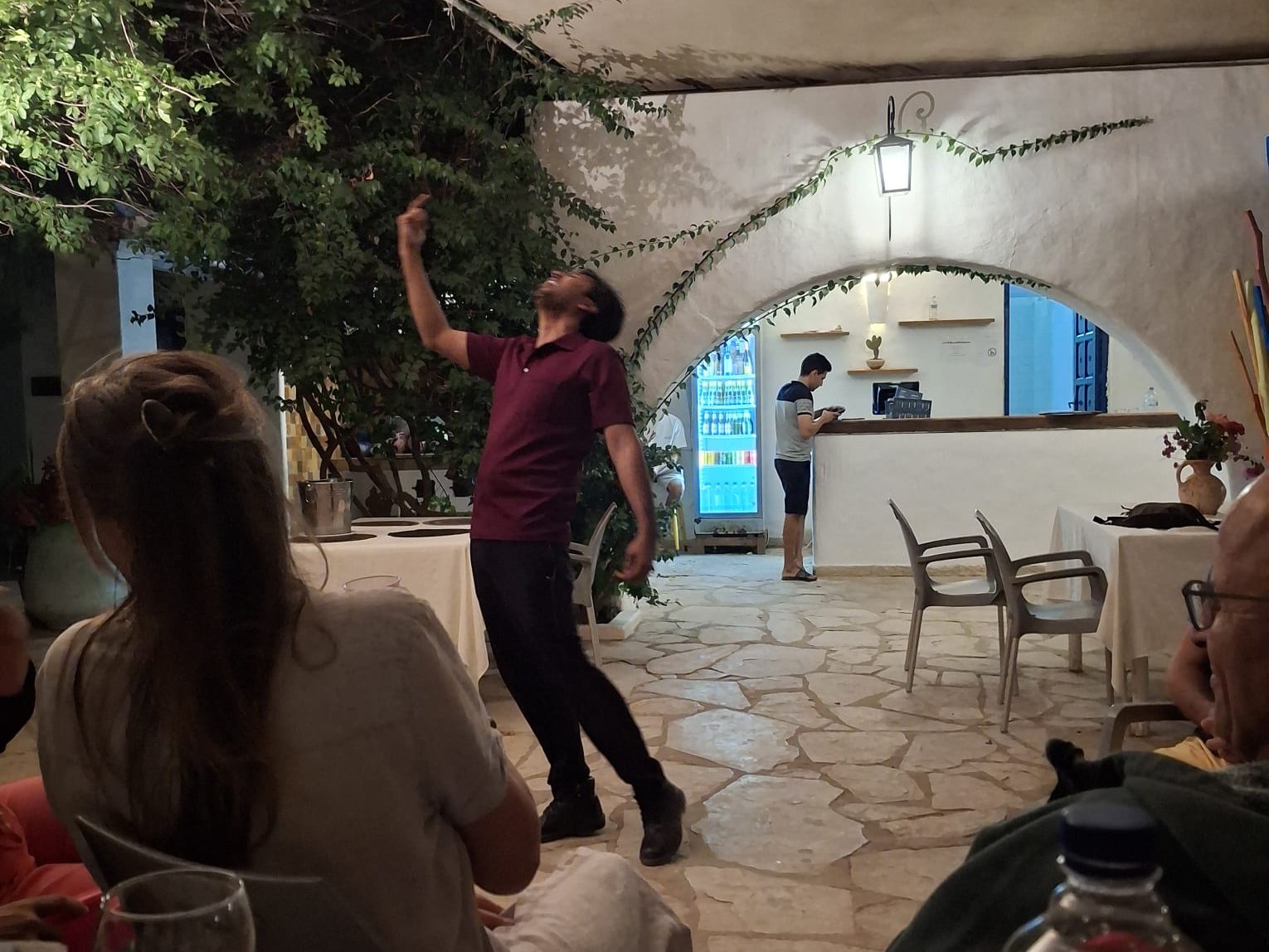
Na een lange dag schrijf ik mijn blog en na het diner zingt Jane een paar liedjes. Prajjwal laat zijn danskunsten zien, en voor we het weten, danst de hele groep samen met de crew van de locatie. Een heerlijke manier om even stoom af te blazen voor de bijeenkomst.
* – * – *
This is the English version of this article:
The Memory of Water
Sea Views and a Lavish Breakfast
The sun is already high in the sky by seven o’clock when I open my eyes. From her bed, Annelieke has already watched the morning light rise directly out of the sea. It is a splendid hotel room—tiny, yet blessed with a view that invites you to linger far longer. Regrettably, our journey resumes immediately after breakfast. Fortunately, there is still just enough time for a shared morning stroll along the promenade. In the brisk morning air, local fishermen are readying their wooden vessels for departure; they wave warmly, greeting us in a melodic blend of Arabic and French. Atop a rolled-up mound of trawling nets, a mother cat has settled her nest of downy kittens. Cats, in any case, roam here in astonishing numbers.
Economic Growth or Human Well-Being
We return punctually for breakfast, which this morning comprises ‘only’ five courses: fresh crusty baguette with fig conserve, creamy halva, hazelnut spread, a fried egg nestled on a spiced tomato and pepper relish, a pain au chocolat, an immense sugared doughnut, and finally a delicate crêpe, cheerfully decorated with chocolate sauce and colourful sweets. At the reception desk, I fall into conversation with Elyes, an economics student working at the hotel. We wander into a philosophical reflection on economic growth. He speaks with quiet passion about how his country has endured decades of systematic exploitation to serve purely commercial interests. In contrast, authentic progress ought to revolve around the well-being of human communities. He is visibly exasperated by the deluge of cheap knick-knacks flooding local souks: manufactured clutter that nobody genuinely needs. As our dialogue deepens, the bus’s horn sounds outside, summoning us to depart.
A Living Ecosystem Against the Neighbour’s Tractor
We travel to the ancestral land cultivated for generations by the forebears of our guide, Elyes. Elyes shares his vision for this plot: he intends to break the grip of monoculture by cultivating active biodiversity, pairing innovative rainwater harvesting with time-honoured surface irrigation. He explains that land here is not transacted by the square metre, but by the olive tree. Because the earth is strewn with coarse river gravel, he has painstakingly laid out comfortable footpaths of compacted sand and fieldstones, bordered by stone channels designed for equitable water distribution.
Upon the land stands a modest single-room stone dwelling. Sunken before the threshold lies an underground cistern catching every precious drop of rain. Around the perimeter of the plot, he has raised a stout dry-stone wall. When Mieke inquires whether the barrier is meant to keep wild animals at bay, Elyes answers with a wry grin: “No, that wall stands entirely to keep the neighbour and his tractor out!” Only by walling off his haven can his vulnerable young saplings remain shielded from ruthless, indiscriminate ploughing.
The Meditative Farmer’s Walk
His garden is an oasis of diversity in the making: thriving amidst traditional olive trees are fleshy Aloe vera, spiky wild asparagus, neat rows of prickly pear (Opuntia), slender young pomegranate trees, silver-leaved desert wormwood (chih), a juvenile acacia, and a distinctive cylindrical cactus. Bordering the plots are compost heaps layered with shredded olive prunings and nutrient-rich mulch of beached kelp. In the corner, a large holding tank acts as a distributor for the stone gravity channels, whilst just beyond the enclosure sits a natural overflow pond beneath a broad canopy tree. Frogs croak merrily amongst water plants, and small fish snap at mosquito larvae; with good fortune, dragonflies will soon make their home here as well.
Beside the cistern, Elyes lifts two heavy galvanised buckets and demonstrates the ‘meditative farmer’s walk’: a rhythmic, repeated stride that not only irrigates the beds but conditions the muscles and calms the wandering mind. Stefan and Prajjwal take up the gauntlet immediately, pacing carefully through the garden with brimming pails of water balanced at their sides. Joe adds that constructing the ecological cottage was made possible through a generous grant from a Californian friend of Penny’s. Now that the physical and financial foundations are laid, the work turns wholly towards community weaving and initiating regenerative demonstration projects.
Solitary Sentinels on a Barren Field
Walking back towards the bus across the neighbour’s adjacent acreage, the contrast becomes painfully stark. Local farmers here plough their soil mechanically every three months to obliterate every single blade of ‘weed’. The olive trees stand in rigid military gridlock, spaced at least fifteen metres apart. Because monoculture trees are exceptionally fragile and prone to blight, growers attempt to prevent cross-infection simply by maximising isolation.
It instantly recalls the bark beetle infestations that devastated the monotonous spruce plantations of Germany’s Harz mountains. It is the tragic, upside-down rationality of industrial agriculture: create an artificial desert monoculture, and when the weakened living system proves vulnerable, condemn the trees to solitary confinement to suppress epidemics. These olives feel hollowed out, solitary, and numb. Severed from a thriving mycelial commons beneath the soil, they cannot whisper to a single neighbour. Not a bird sings; not a solitary cricket chirps. Not a blade of grass pierces the dust; there is only barren, sun-scourged flint.
The Manifold Faces of Water
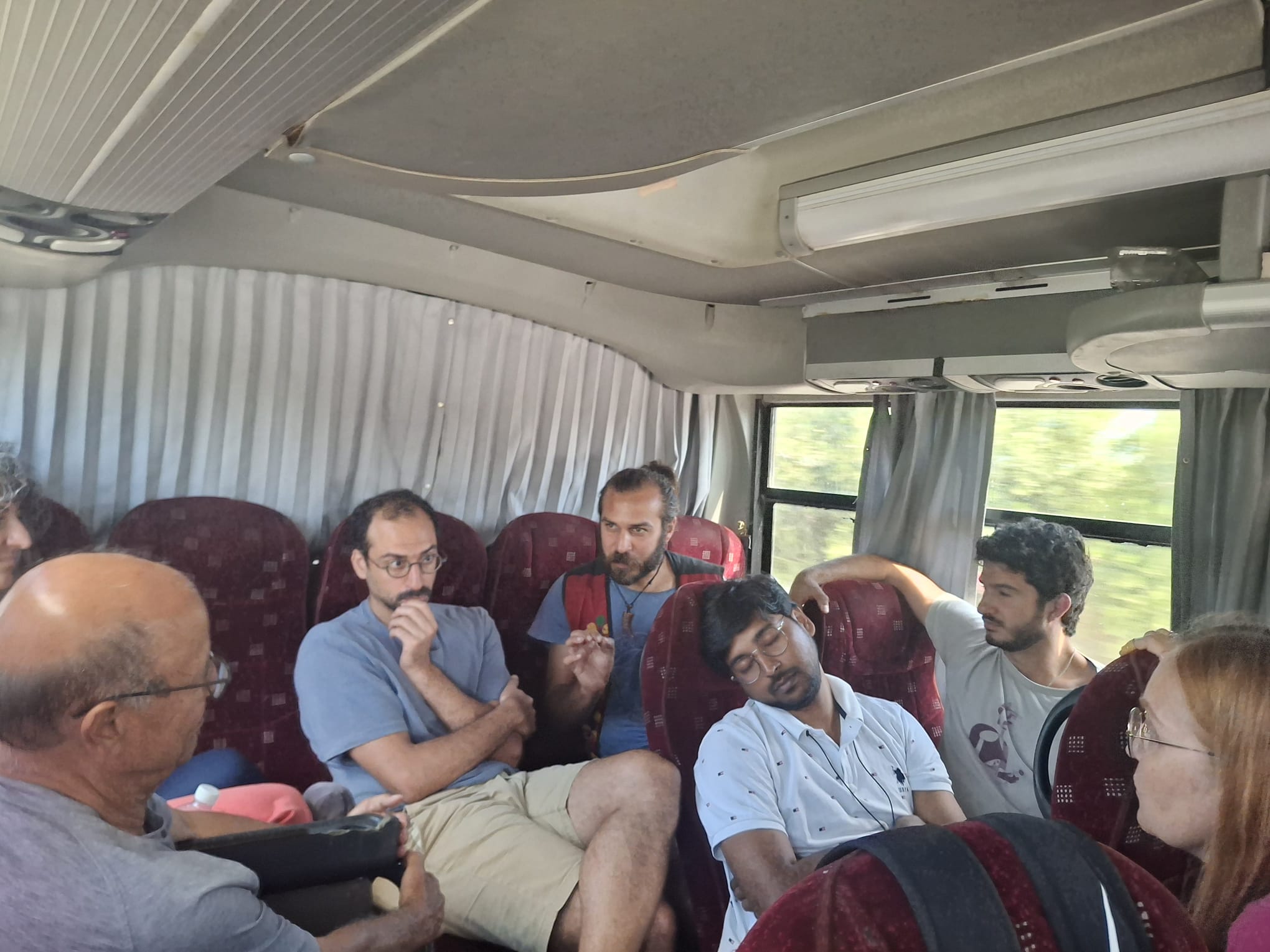
Aboard the swaying bus, I return to the overarching inquiry I brought with me on this journey: what does water truly mean to our diverse fellowship across our varied cultures? Is it sacred, utilitarian, or restorative? I think of Youssef, who washes himself regularly with deep, quiet reverence, an ablution breathing spiritual purification, yet in the sweltering desert heat also an elemental reset for clarity of mind. I picture Joe and Hasan standing serene beneath the rushing waterfall like carved river stones, and Denis, drawn into the Sahara to coax ancient mountain streams back into their riverbeds to resurrect the prehistoric lakes of Central Tunisia.
Merging with the Landscape
Following a light lunch of crisp, aromatic salads at Dar Ammar, I continue talking with Claire and Mieke. Claire shares luminous childhood memories of a crystalline alpine lake where she once camped with her parents, penning a postcard to her grandparents from the shore. To this day, she canoes across mirror-flat waters each year. The unbroken stillness of the deep and the silent ring of forested crags consistently evoke in her a sensation of dissolving entirely into the landscape; a recent photograph holding that selfsame childhood postcard united past and present in one suspended moment.
Forbidden to Play in the Stream
A little later, I sit down beside Prajjwal. He shares openly that he feels no spiritual or religious affinity with water whatsoever; he identifies staunchly as secular. His youth in India was blanketed by deep superstition: every childhood scrape or setback was chalked up by his anxious mother to celestial displeasure. As he recounts this, he strikes his palm with his fist to underscore his point: “No, Mother, my knee is bleeding because I took a nasty tumble off my bicycle!” That uncompromising clarity of cause and effect propelled him into empirical natural science. Until the age of twenty, his mother strictly forbade him from swimming for fear of misfortune; carefree childhood paddling was something he never experienced.
Yet he grasps the bioregional vision championed by Joe Brewer and the Design School with pristine lucidity. It is precisely his scientific and ecological grounding that breeds impatience with hollow ritual: how can one proclaim a river like the Ganges sacred and offer daily ceremonies on its banks, whilst simultaneously discharging tonnes of untreated chemical sludge and plastic into its current? Authentic reverence for a living artery reveals itself not through liturgical phrases, but in safeguarding and respecting the living web upon which all life hinges.
Goddess Africa and the Vanished Forests
We arrive at the archaeological museum of El Djem. Laid bare before us is a magnificent Roman provincial city, crowned by an expansive villa adorned with breathtaking mosaic pavements that have outlived empires. The level of craftsmanship is extraordinary; thousands of miniature coloured stone tesserae coalesce into scenes of vivid, lifelike precision.
Elyes leads us to the famed mosaic of the goddess Africa. He explains that Roman outsiders originally bestowed the name Africa upon this northern province alone, a colonial label subsequently stamped across the entire continent. For his own part, he identifies primarily as Mediterranean, his lineage woven into the inland sea. It mirrors the bioregional premise that Joe and Penny advocate when they refer to North America as Turtle Island: political frontiers are transient human fictions that disregard natural hydrological catchments.
Alongside Prajjwal, who brings his ornithologist’s eye, I examine the animal mosaics. We pick out hares, stags, purple herons, lions, ducks, and leopards. A quiet melancholy settles over us: around 300 AD, this land was a verdant mosaic of dense oak and pine woods, fertile scrubland, and open savannahs threaded by perennial streams.
From Imperial Granary to Arid Steppe
North Africa served as the breadbasket of imperial Rome. Yet the subsequent desertification and the extinction of large mammals were no stroke of climatic fate; they were the direct consequence of centuries of human extraction. Unsparing logging for naval timber and smelting, wholesale clearing of ancient forests for cereal monocultures, overgrazing by herds, and the industrial capture of apex predators for gladiatorial spectacle in the amphitheatres stripped the land bare. What was once a resilient, living forest was degraded by human design into a parched steppe.
Gladiators and Dromedaries at the Amphitheatre
Presently, Tellel appears, signalling for us to gather. We return to the coach for the short hop to our next destination: the colossal amphitheatre of El Djem, an imperial colosseum rising almost completely intact above the modern town. Stefan carries his wooden swords, dutifully brought along by his parents. Once inside the sandy arena, his intentions become plain: he challenges his father, Denis, to an impassioned duel.
Whilst we sip cold drinks nearby, a dromedary saunters casually into the street from around a corner. Directly behind it putters an elderly man astride a worn moped, nudging the beast forward at a leisurely crawl. The camel ambles unhurriedly over the paving stones, wholly unfazed by the bustle. The scene is delightfully comical: a man taking his dromedary for an afternoon walk through the town centre! Does local by-law require him to clear up the droppings as we must in the Netherlands, I wonder aloud? And what dimensions would such waste bags take—pedal-bin liners wielded alongside a coal shovel? The picture strikes one as utterly surreal, until one remembers that across European historic centres we routinely parade horse-drawn carriages through traffic. In truth, the distance between us is negligible.
Around the piazza, we browse artisan stalls displaying hand-cut mosaics. Henderieke purchases a stone plaque inlaid with an exquisite tree, whilst Prajjwal distributes freshly baked local bread among our company. We relish the cool shade beneath a trailing magenta bougainvillaea until the coach calls us once more.
The River Flowing Through Us
As the sun dips below the horizon and paints the sky in shades of ochre and burnt orange, I ponder my own roots in water. As a girl, I took to the water with my parents aboard our small boat, plunging into the lakes the moment the engine fell silent. As a toddler, I was already skimming across frozen Dutch canals to the neighbouring village on ice skates, bursting with pride. My father dreamed of embarking on sweeping cross-country winter skate tours as he had in his youth, yet in our rapidly warming climate, those vast sheets of ice never returned for us. And whenever I cycled off to swimming lessons, my grandmother was always there on her balcony, waving encouragement.
Is water sacred to me? Perhaps not in an orthodox, liturgical sense, but certainly in an existential, embodied one. For twenty years, I have walked every single morning with my dog along the banks of the Laak, the stream winding behind our home. I watch its currents swell into torrents after cloudbursts and lie glassy and still beneath summer willowdown; I watch ducklings fledge, and in winter I witness swans, mallards, and coots gathering in a single unfrozen lead of dark water. Through the river, I read the turning of the seasons and gauge the vitality of the landscape.
Ancient, Deep Knowing
This journey through Tunisia has drawn that thread tighter. As a species, we must surrender the hollow illusion that we can bend the living world to our will. The trees, the bedrock, and the subterranean waters hold an ancient, deep literacy that modern culture has discarded. Our primary task is simply to quiet ourselves and remember how to listen.
Outside, the moon hangs nearly full and brilliant in the night sky. Tomorrow brings a welcome day of rest before our three-day gathering commences and new voices join the circle. It feels fitting that the lunar cycle will begin to wane thereafter: an inward turning, an invitation to share lived experiences, and to weave the newcomers gently into our collective fabric of soil, canopy, and living water.
After the long day, I write my blog, and after dinner Jane sings a few songs. Prajjwal contributes with his dancing skills, and before we know it, the whole group is dancing with the crew of the location. A wonderful way to blow off some steam before the gathering.
Deel deze blog via:


Meer weten?
Schrijf je in voor de nieuwsbrief of neem contact op met één van de kernzwermers. Sluit je aan bij de Proeftuin voor Transitieversnelling en zet samen met andere pioniers de volgende stap naar een regeneratieve toekomst!
Lees meer
Spelen in het zand en helend water
English: scroll down Als ik wakker word, zijn mijn tentgenotes al op. Het kamp baadt nog in volkomen rust. Zachtjes sta ik op; in de verte zie ik mijn drie metgezellen ieder in een andere richting naar de horizon wandelen. Die gloeit al zacht oranje: de belofte van...
Zand, zout en een race tegen de donder in de Sahara
English: scroll down Ochtendcomfort en zoute lippen De dag begint met onverwachte luxe: een douche met voldoende waterdruk, warm water en doortrekkende toiletten met een bril. Maar zodra ik naar buiten stap, merk ik dat mijn lippen direct zout smaken. Het voelt...
‘Mon ami nouveau’ in de woestijn in Tunesië
English: scroll down Als ik mijn ogen open, zie ik dat Mieke en Youssef al op zijn. Het is zonnig weer hoewel de binnenplaats nog in de schaduw ligt. We gaan vandaag naar de woestijn, twee nachten in de Sahara doorbrengen. Annelieke had dit ons al verklapt en ze...